Covering the basics: Making a character

Published April 20, 2026 by Groupfinder Team

Ülevaade

Covering the basics https://groupfinder.eu/library?category=guides-how-to&search=f1=133” is a easy-to-follow set of articles helping players get through the first steps of the game. You found a game to join? Well done, but now what?

A character

What makes a good character to play? Is it optimizing your stats to be the most overpowered character? Picking the right skills, feats, powers or spells? For some players, yes - that is important. And at the end of the day, you don’t want to end up with a character who will be outdone by everyone else in your party. But at the same time, your character should be more than just useful - they should be interesting. They are more than just “Human Fighter” or an “Elf Ranger”. When creating a character, what is important, but to create a character the other players and the world will want to interact with, focusing on who is even more vital. We will not be focusing on the intricate details of how you should create your character sheet, instead the article will serve as a guideline of how to flesh out your new hero (or anti-hero).
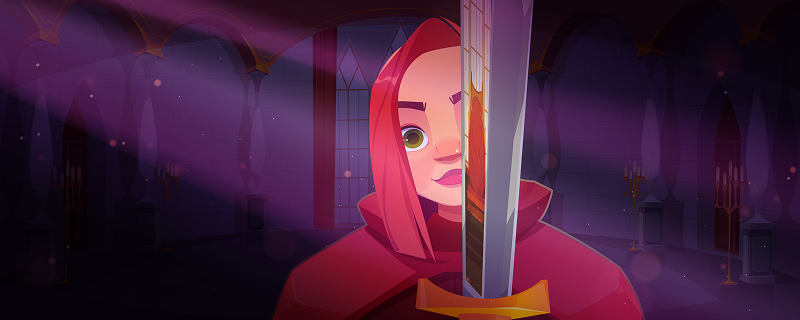
Your character should be more than just a two-dimensional adventurer. Make them real and the game will treat them as such.

Who is your character?

To start weaving your character into someone interesting, you need to find that core concept to start building around.   For inspiration, think back at some characters from a book, movie, tv show, game or real life. Find someone that has that core essence that you feel would be interesting to roleplay. Perhaps Rincewind the tourist from Discworld, Beorn from The Hobbit, Donna from Doctor Who or perhaps Esquie from Clair Obscur. Whichever character comes to you as someone you’d like to somehow pay homage to, can be worked with. Think of what makes that character interesting to you, is it their attitude towards problems, other people or nature. Are they clumsy, perceptive, analytical or indifferent towards things? The way they see the world is a great direction to have. Now the end-goal is not to copy the character 1 to 1. That is almost never going to work. The nature of the game is likely to be very much based on random outcomes, no matter how well-planned and foolproof your approach is. As dice determine the success of various attempts, it is best to keep that in mind.   A bad roll can turn your James Bond into Johnny English.

Flesh them out

If you have a core concept, you can start working on making them more real. Ask yourself various questions about them. “What made them like this?” “Why would they be adventuring?” “Is there a problem they are running from?” “What is their favourite dish?” Yes, even figuring out their favourite food can be a great process of figuring out who they are. It might not be a fact that would ever come to play, but can be a good stepping stone to actually understanding them. Knowing their favourite dish or colour can be helpful when diving deeper into that answer. Their favourite colour is pink - why? Did they grow up in a house that had pink wallpaper? Or was there an ever-blooming cherry blossom tree that they have fond memories of? Where was that tree? Does it hold some significance to them? Was there another person involved with that fondness? What happened to them? And so forth. Just like actual humans have preferences that don’t derive from nothing - neither should your character. The more you ask, the more real they become through this. It is highly recommended to write those points down - so you have a written understanding of them. And you can later refer back to the document to remind yourself of who they are.
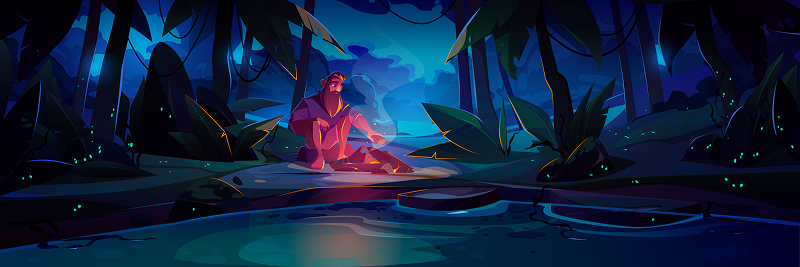
What made them like this? A tragic event in their past or a goal they haven't yet reached?

Backstory

Ask your GM questions about the world and the setting. The more you understand, the easier it will be for you to place them there. If your GM is willing to work with you to flesh out the world around your character’s past, you will end up adding towns, locations, events and traditions to their world.   You may find it difficult to write your character’s backstory https://groupfinder.eu/library/covering-the-basics-creating-a-character-backstory. You are not a writer, at least thats what you keep telling yourself. Doesn’t matter - your GM is hardly expecting you to write an eloquent piece of literary history. And that is not really that important. What is, is to know where your character came from - do they have a past that slowly catches up to them. A debt that will eventually have to be repaid. Or a goal that they are striving towards, as they have set out on their adventuring path. You shouldn’t try to aim for a 7-page backstory from the start. Some GMs might find backstories that are too detailed and long to be counter-productive. But setting where they grew up, with whom they interacted back then - how they grew up and mark down some important events that formed them as a character. Think back to the core concept of your character - and reverse-engineer your way towards the events and reasons why they ended up that way.

Generative AI

Now that various AI tools exist, players might find it easy to prompt the LLM with something like “Write a backstory for my elf ranger. When they were young, their parents abandoned them in a forest. There, wolves adopted them. But the wolves also abandoned them. Now they trust nobody. Their aspiration, though they keep it a secret from others, is to open a bakery.” And AI will give you a long backstory to work with.   But you are not done. Don’t just copy-paste it into a document and send it to your GM for approval. While using Gemini, ChatGPT or any other AI tool is useful for fleshing out some ideas, you need to make sure they are your ideas. You can take the draft you have been provided with and start working on the details - AI is unlikely to understand your character perfectly - what it is, that got you interested in them in the first place. Remove, add, rewrite and polish the initial draft. Make sure it is consistent with the world your GM has given you. And once you are done with an initial version, take some time and read through the whole backstory. Does it make sense to you? Do they feel real? And is the core idea still present? At the end of the day, it is your character. Using various tools to help you flesh out is helpful, but you should know them better than anyone else. Consider making a short summary section for you and the GM to reference later. Highlight various bits that are important to you.

Connecting people

Your character doesn’t have to be a lone wolf in the world. At times it can be better and more convenient to connect your character with another player’s.   Talk with your party before the game and see if you can find some common ground with some other character. Perhaps they were childhood friends, but drifted apart. Or perhaps they met once on opposite sides of a battlefield. Creating a connection to another character can make it easier for your GM to connect them to their world.   A shared past can be a great framework to make sure your party ends up as a cohesive group, not just “written together”. Your Game Master will have their hands full with various aspects of running the game, they will appreciate it, if you hand them characters that have a reason to adventure together.
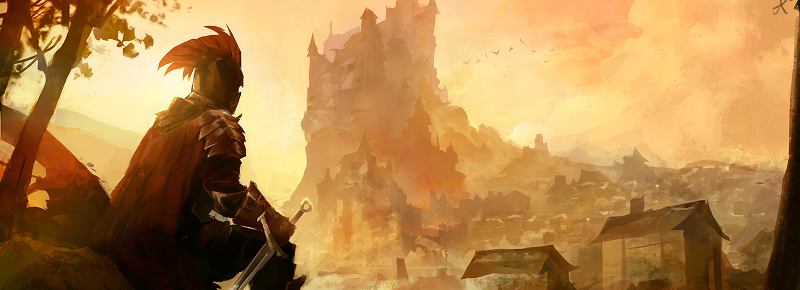
Your character's journey is just beginning. A good backstory is a great foundation to build on.

Work in progress

Your character should not be something that is completed once the first session rolls around. Instead feel free to add bits and pieces as you discover the world through playing. You are bound to find new aspects of the world, that your character could be connected to. Of course make sure that your GM is notified of these additions. And that it still fits with their vision of the game.

Find your story

If you have a great idea that you want to play with, but haven't found a game to play yet. Look at the games that are looking for players https://groupfinder.eu/list. Or post your player profile and find a tabletop rpg group https://groupfinder.eu/players to play with.

Other entries

Warhammer Fantasy Roleplay (2018)
Tabletop Roleplaying Games

Warhammer Fantasy Roleplay (2018)

TTRPG
English
Complex
Warhammer Fantasy Roleplay or Warhammer Fantasy Role-Play (abbreviated to WFRP or WHFRP) is a role-playing game set in the Warhammer Fantasy setting. The fourth edition rooted in the first and second editions was released under licence by Cubicle 7 in 2018. The system it directly evolved from is Warhammer Fantasy Roleplay 2nd Edition Description The primary setting of WFRP is the Empire, a faction located in a region of the "Old World", that is based loosely on the Holy Roman Empire, with a number of baronies, counties and dukedoms fashioned after the fiefs of elector counts and dukes. One of the most identifiable features of the Warhammer setting is Chaos. While the forces of Chaos in Warhammer Fantasy Battle are depicted primarily in the form of bloodthirsty marauders, towering dark knights and savage beastmen, Chaos in WFRP is an insidious force gnawing at the fabric of society. System Overview & Key Features The Career System Instead of fixed classes, characters enter specific Careers like Boatman, Grave Robber, or Wizard Apprentice. You spend experience points to advance within your career or transition to a related one. This represents your character's actual life and job in the world rather than just their combat role. Brutal Critical Injuries Hit points are low and do not increase much as you level. When a character is hit while they have no remaining Advantage or are critically struck, the player must roll on gruesome tables. These results range from minor scars to losing an eye, a limb, or your life. Corruption and Sin Magic is inherently dangerous and tied to the Winds of Chaos. Using magic or encountering dark artifacts can grant Corruption points. If your Corruption exceeds your willpower, you may develop physical mutations or mental instability, eventually turning into a servant of the Dark Gods. Fate and Resilience Characters have limited pools of Fate and Resilience points. Fate can be spent to avoid certain death, while Resilience allows you to ignore the effects of a mutation or a critical hit. These are rare and precious resources that represent the character's sheer stubbornness to stay alive in a doomed world. Additional links cubicle7games.com - Official Cubicle 7 website warhammerfantasy.fandom.com - Warhammer Fantasy Wiki (Comprehensive lore for the Old World)

Loe edasi

Covering the basics: Creating a character backstory
Guides & How-to

Covering the basics: Creating a character backstory

Covering the basics
“Covering the basics” is a easy-to-follow set of articles helping players get through the first steps of the game. You found a game to join? Well done, but now what? Think of your favourite characters from either a book, movie or a tv show. Can you form a list of what actually makes them stand out from all the others? Not just what they look like or what their actions were in the story. Most likely, once you stripped those characters of their physical appearances and put aside the plot of what they achieved throughout you are still left with elements that actually made them become memorable. The time you had with that character was most likely a fragment of their entire life. Their actions, beliefs and behaviour was likely derived from something that made them that way.   It was their backstory. A backstory as a structure When creating your character, once you set aside the technical attributes and specifics, it is worth spending more time on figuring out who they are. While it might feel like a waste of time and effort to spend too much time on building their backstory, it is likely to help you out in the long run. Assuming your character will be yours for a longer period (not one that is built for a quick oneshot), understanding them will become invaluable. Not just for the Game Master to know where your character is from and how they ended up as an adventurer - but it will help you stay consistent throughout the campaign. Your character should stay consistent. This isn’t to say that they can’t evolve and grow throughout the adventure - they most definitely should be affected and moulded by their experiences throughout the story. But at their core, they should still be the same person from session to session. And this is why having a thorough backstory is important. Knowing how they would react in a situation should come from understanding why they would act that way. What experience in their previous life set them up to see the world in this way. It will also be a great framework for your Game Master to have and construct around. After all, they dont know your character. But having a reference document (a backstory) will be of great help. Matching the theme Before you start collecting various ideas and concepts for your character be sure to familiarize yourself with the game and it's world you are about to bring them into. Whether the story will focus heavily on the world and the politics or will there be enough "screentime" for the characters to develop their story. Hoping to fully go through your character's backstory in a game that will not give enough time for that will lead to disappointment and potentially disinterested players. All of that should be discussed during your session zero, where the theme and topics are set and agreed upon. The theme of your character should fit both with the world and potentially with other players. Of course the generic tabletop gaming table will include characters of different styles and themes. However, depending on the immersion balance and expectations, you might want to discuss this with other players, without delving too deep into specifics. Agreeing on following a similar theme or storyline will help your party feel more likeminded and in the same genre.  /images/general-media/1779464200_QOr2M7LS.jpg Think big, write small Before you end up with a document, that is stretched over tens of pages (Which most GMs will not bother to read and memorize) try and create a rough overview of their story so far. Limit yourself to a few paragraphs at the most. As an example, let’s create a character alongside this article. Meet Bork… the orc. To start off with, let’s focus on simply creating an outline of who they are. Bork’s life began in tragedy when a brutal bandit raid destroyed his birth-tribe's village. His parents either perished or were forced to flee in the chaos, leaving the infant behind to perish in the smoke. He was saved by a twist of fate when Ningo, an aging gnome hunter drawn by the smoke of the burning huts, discovered the crying orc baby in the ashes and chose to adopt him. Raised in Ningo’s secluded woodland home, Bork’s upbringing was completely upside down for an orc. Instead of being taught bloodlust and brute force, he was raised on gnomish values of curiosity, patience, and meticulous planning. Ningo taught him how to survive using stealth, tracking, and clever traps, resulting in a towering, muscular adult orc who could move with surprising grace and possessed a gentle, analytical mind. Once Bork reached adulthood, Ningo realized his adoptive son was shrinking himself down to fit into a gnome's world. Wanting Bork to forge his own identity rather than just mimic his upbringing, Ningo encouraged him to venture out into the world. Equipped with a heavy pack, a hunting bow, and a mind full of gnomish meals, Bork set off into the wider world to discover who he truly wanted to be. And thats it - this is Bork in a nutshell. But what we have established throughout this brief introduction are multiple key elements we can built upon. What was the tribe like, who were the bandits? Why did they raid the tribe? Who were his biological parents? What is Ningo’s story? What kind of values did he instill in Bork? And many others. But as a brief overview we have much to work with. From here you can fill in the blanks, separate it into various other subsections to dive deeper into. Find answers, more questions and potentially leave things vague. Many elements can be left vague so that your Game Master can pick elements to integrate into the campaign story. Unique. In this version To quote Mark Twain: "There is no such thing as a new idea. It is impossible. We simply take a lot of old ideas and put them into a sort of mental kaleidoscope. We give them a turn and they make new and curious combinations." While you can try and work on an uniquely unique concept, it is unlikely that you will be negatively called out for "reskinning" an existing character from a popular franchise. But if your goal is to create an interesting character, borrowing from other creators and slightly modifying them is perfectly acceptable. Just be respectful about it and acknowledge that your character is either an intentional or unintentional between you and someone else. There is no shame in basing different bits of your character off something else.   /images/general-media/1779464798_xLnOlEbn.webpYour GM will thank you for any cutlery you prepare for him Knives and other “cutlery” Knives Years ago a reddit user jimbaby introduced a system called “Knife theory”. A simple system to build plot hooks into your character’s backstory. These “knives” are elements that resonate with your character - and your Game Master can use to “stab” your character with (metaphorically). There are various types of knives you can craft:   Relationships - Bork’s biological parents. Or his adoptive father, Ningo. Debts/Vows - Bork’s somewhat suppressed hatred towards the bandits and his desire to one day avenge his tribe. Unanswered questions - Who were his parents? Why did the bandits assault the tribe? What is the deal with Ningo? Internal conflict - Being part orc, part gnome, he might have found it difficult to fit in with his non-traditional life. A secret - Perhaps Bork has throughout the years ventured back to where he grew up and discovered something that he shouldn’t know. And many others in a similar style. While these knives aim in different directions and are rather vague, pick those that  resonate with you and dive deeper. You don’t have to cover all five themes - a few will suffice. But by creating those knives (and handing them to your Game Master), be aware that you are giving them permission to use those at any point in time. If you don’t want Ningo to be put into any danger - make that explicitly clear and keep any knives pointing away from them. Try and aim for three to five different knives. Some of them might require you to collaborate with your GM to make sure they can find a way to fit it into their story. Spoons In addition to sharp knives, you can create “spoons” - these are minor, everyday character flavor details that bring them to life (Their favourite tavern meal, their distinct posture, or how they sleep). These are not elements that are to replace knives - you can include them to bring more character and personality to your adventurer. These will help you flesh out your character in a more real sense. Connecting these spoons to their backstory, you can discover what makes them tick, what brings them joy and what hobbies or habits they might have. Even a powerful warlord can find enjoyment in knitting. And it makes them less two-dimensional, showing them as more "human". Forks The character's core motivations and prongs of desire. Goals and ambitions that they would like to strive towards throughout their story. These are more proactive elements that you as a player will gravitate towards throughout their journey. Forks should also be shared with your GM, as they could seed the story with situations and possibilities you would like to stick a fork in. Expand and summarize By now you will have a general overview of your character with various plot hooks and ambitions. While preparing those, you can expand your current overview with additional details to connect various bits and pieces. Adding additional characters your character may have had encounters or relationships with is a great way of introducing additional knives and expanding the character’s story.   When collecting your knives, you are bound to discover gaps or missing connections: Bork enjoys reading  - but it is likely that he has exhausted Ningo’s library many times over. This allows you to expand his backstory with a travelling librarian or a salesman who would bring him books to consume. Or a friend who shares a similar passion with whom he used to discuss various stories with. Throughout this process you may want to have a separate section for key takeaways. In addition to describing his book club friend and their encounters, create a short summary: Frank(27), a human farmer, also interested in books - friend, but hasn’t seen him in over two years. These quick summaries will help you to quickly recall various elements from Bork’s backstory. And your Game Master has a handy list to quickly reference, as they will most definitely not be able to remember your entire backstory at all times. /images/general-media/1779465015_mS7MPpFH.gifKeep in mind. You are not writing a book, you are creating a refererence document Done but never completed Make sure to give your Game Master enough time to process your character’s backstory, ask for clarifications and potential changes. You want your character to be part of their world, not have it as a separate entity forced into their story. And feel free to continue expanding your backstory throughout the campaign. Not exactly changing anything overly important (unless the change is explicitly done with the permission of your GM), but instead expanding on elements that already exist in your story. The more different elements your backstory has, the more the other characters’ have to discover and find out about. Understanding and knowing your character will help you make decisions on the spot, that feel in-character for them. Ready to find a dnd group and start working on your character? Post your profile and put yourself out there.

Loe edasi

TalesNTokens
Tools & Platforms

TalesNTokens

Virtual tabletop (VTT)
English
Free
TalesNTokens brings map building, live rooms, character tools, notes, assets, dice, and campaign management together in one browser based and FREE connected experience, designed for fast setup, smooth play, and real-time collaboration across any device. No scattered tabs. No bloated setup. Just your world, ready to play and share. Create interactive maps for the way your world actually plays Design playable spaces directly in the browser with layered terrain, assets, buildings, openings, roofs, and lighting controls ready for live sessions. - Layered terrain, water, cave, forest, asset, and building workflows - Brush, shape, free-shape, erase, and point-by-point drawing tools - Reusable assets with drag-and-drop, grid-aware placement - Floor, wall, roof, door, window, and visibility controls - Save maps and edit seamlessly across desktop, tablet, and mobile Run the session from one connected command space Import your interactive maps into live rooms and run the table from a clean, modern interface that keeps powerful session controls close without overwhelming play. - Interactive maps with tokens, dice, initiative, notes, and character tools - Automatic dynamic lighting from Map Builder walls, doors, and windows - Doors and windows carry into play as meaningful session controls - Simple interfaces with deep control for advanced live sessions - Run and play the board from anywhere with full device and touch support Play on any Android/IOS mobile, tablet, or desktop. Built to work on your devices with proper mobile UI and touch support. Companion Mode also keeps players connected without needing a second monitor or desktop setup. Links talesntokens.com - Official website ko-fi.com - Ko-Fi page

Loe edasi

Looking for a group?

Find a tabletop group to join or players to invite.
Groupfinder is a free looking-for-group/players platform. By players, for players.