Most groups that leave Foundry VTT don't need another Foundry. They need less of one thing: less hosting, less module upkeep, less setup before the first session. So before you look at the list, decide which part of Foundry was the problem.
is still the deepest toolbox around. A $50 one-time license, dynamic lighting, scene levels in Version 14, and over 200 supported game systems. But someone has to run the server, and someone has to fix the lighting module when a major update breaks it. Usually that's the same person.
Usually that's the GM.
Every tool below is listed in the Groupfinder Library. We leaned toward tools with a track record or a team you can name. Where a tool is new, we say so.
If You Want Depth Without Running a Server
Fantasy Grounds
is the closest thing to Foundry on this list, and it's been around far longer. SmiteWorks released the first version in 2004 and rebuilt it on the Unity engine in 2020. In November 2025 it went free-to-play: the old $50 license is gone, and GMs and players can host and join without buying anything.
The licensed rulebooks and adventures still cost money, and that's where Fantasy Grounds shines. Its rules automation for the big systems is hard-coded and thorough. Click an attack, and the hit, the damage and the condition are already applied. It's a desktop app for Windows, macOS and Linux, so every player installs it. That's the trade.
Roll20
started on Kickstarter in 2012 and runs in the browser. Nobody installs anything, nobody hosts anything, and it supports nearly every system you've heard of (and some you haven't). It also has the biggest pool of players, which matters when you're recruiting strangers.
The catch: dynamic lighting and the API scripts sit behind a paid subscription, and only the game's creator needs it. If your Foundry habit was walls, doors and vision, budget for that.
D&D Beyond Maps
If your group only plays
, look at
before anything else. Wizards of the Coast's official toolset has a free virtual tabletop called Maps built in, and it reads the character sheets you already keep there. A Master Tier subscription lets the GM share purchased books with the group.
It does one game. For a 5e table, that's the point.
Quest Portal
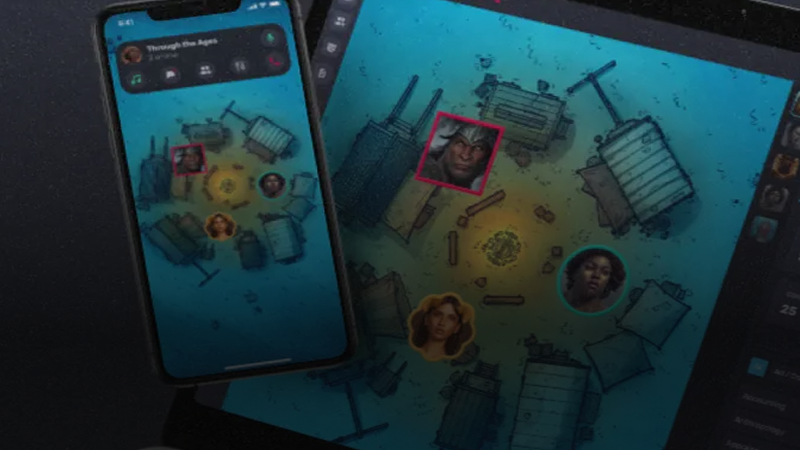
is a funded company that launched its mobile app in January 2023. It's free for GMs and players, with an optional Pro subscription. The pitch is a virtual tabletop that works on a phone as well as on a laptop, with fog of war, voice chat, shared notes and sheet templates for D&D,
and
.
Good fit for a group where one player always joins from the bus.
Tome Gaming
(TomeVTT) runs in the browser or as a Windows app, and it's built for
(both 2014 and 2024 rules) and Pathfinder 2e, with the SRD content already inside. Physics-based 3D dice, a storybook of adventures, and an Obsidian plugin for GMs who keep their campaign notes there. Free, Basic and Premium plans.
If you ran Pathfinder 2e in Foundry because the PF2e system is so good, this is one of the few alternatives that takes that game seriously.
If You Want Something Lighter
Owlbear Rodeo
launched in 2020 and stayed small on purpose. Upload a map, drop tokens, send a link. Players don't need accounts. Version 2 added extensions, so you can bolt on initiative trackers or dice without the core getting heavier.
There's no rules automation and no character sheet engine. For a group that used maybe 10% of Foundry, that's a relief rather than a loss.
Virtual Battle Mat
is new, and we like its stance: every token and map in its catalog is made by human artists. The default tokens are isometric renders of 3D miniatures, so the table looks like a painted mini collection instead of a stack of circle portraits. It ships free adventures for 5e, OSRIC and
, and it has built-in voice and video.
The free tier stays free. Premium is $6 a month or $36 a year.
ICVTT
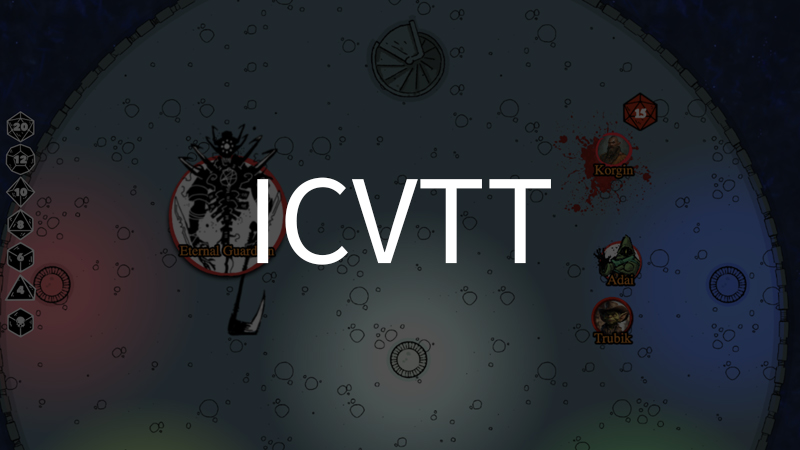
began as Runehammer VTT, made by Runehammer Games for
, and the community has maintained it (open source) since 2022. A map, tokens and dice. No macros, no chat, no settings menu, no tutorial. You don't need one.
It's the opposite of Foundry, and that's the reason it's here.
FreeVTT
is free, with no premium tier, and it keeps your campaign data in your own browser instead of on someone's server. That's Foundry's data-ownership idea without the server. It still has the parts Foundry users miss first: dynamic lighting, a grid with measuring, and a combat tracker that shows HP and AC on the tokens. The compendiums cover D&D 5e (both the 2014 and 2024 SRD) and Pathfinder 2e under the ORC license.
Export the campaign now and then. Browser storage is only as safe as the browser.
Narrantium
is built around scenes rather than maps. The GM lays out a branching story in a visual quest builder (scenes, NPCs, music, encounters) and then plays through it, with a Player Screen you can cast to a TV. Players join with an invite link and no account. It's made by the Italian company Playgrown, with a DM subscription and a free plan.
GMs who spent more time in Foundry's journals than on its battle maps should try this one first.
If You Still Want to Self-Host
Cauldron VTT
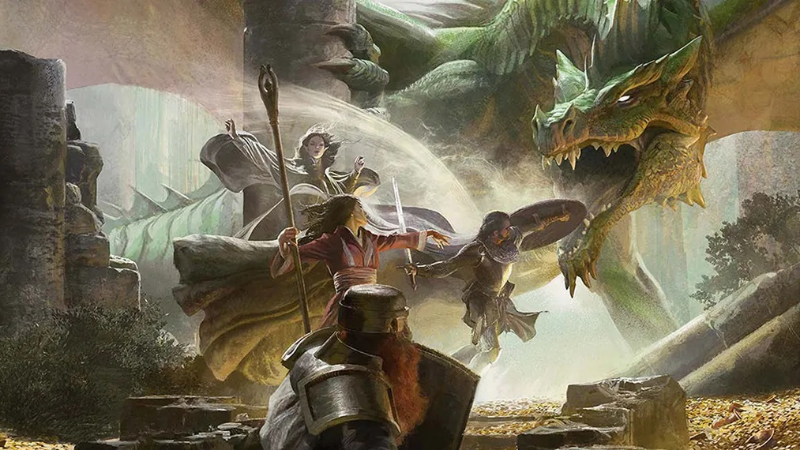
is a free, open-source web app (PHP, JavaScript and MySQL, with the source on GitLab) that has been through several major versions. Combat tracker, fog of war, dynamic lighting, map drawing, inventory and a journal, with a generic dice system and support for D&D 5.5e and Pathfinder. You can play on the official site or host it yourself.
It's the self-hosting option for someone who already runs a web server and doesn't want a Node.js app.
If You Play at a Physical Table
Beyond Tabletop
is for groups that sit in the same room but are tired of paper. Character sheets with class, feat and spell libraries, and a tactical map with initiative and status markers, all synced live on phones, tablets and laptops. It covers D&D 5e and Pathfinder, and it's free and funded by donations.
Put the map on a laptop in the middle of the table and you have most of what you used Foundry for at a live game.
Dungeon Master Tool
is an offline-first GM app for Windows, Mac, Linux, Android and iOS. Battle maps with fog and layers, a combat tracker, worldbuilding with era timelines, and a second-screen output for a TV or projector. The core works without an account and is free under a CC BY-NC 4.0 license.
You only need an account for online play and its marketplace. A good pick for the GM who preps on a train with no signal.
If You Want Something Different
Phroller
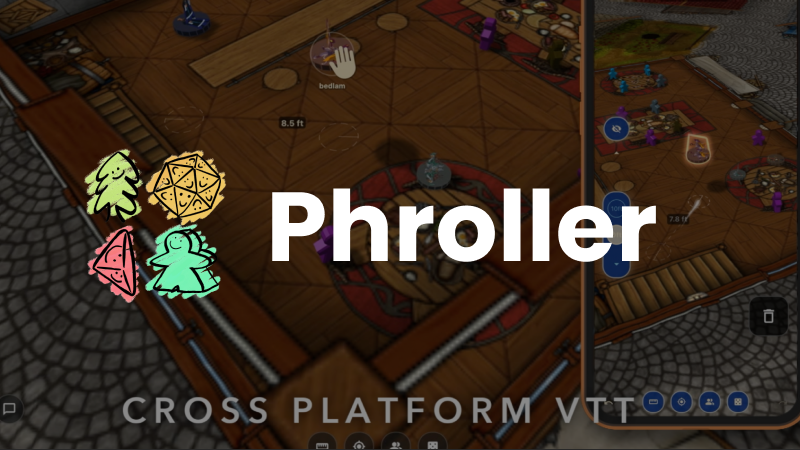
is a native app, not a website, built touch-first for phones and tablets and also available on Windows and Mac. It works offline, players join without an account, and it supports multi-level maps (the feature Foundry took until Version 14 to ship). It's listed on Steam, Google Play and the App Store.
If your group plays on tablets around a kitchen table, Phroller is built for exactly that.
Samwise
comes from the Pirilampo Mestre digital art studio and has been on the app stores since 2023. Its trick is that anything can be a sheet: you build the character sheet for your own system or homebrew, then play with interactive maps (lighting and fog included), real-time chat and dice. Browser, Mac, Android and iOS. The GM edition is free, with an optional upgrade.
It's a good home for the homebrew system that never got a Foundry package.
Abstractica
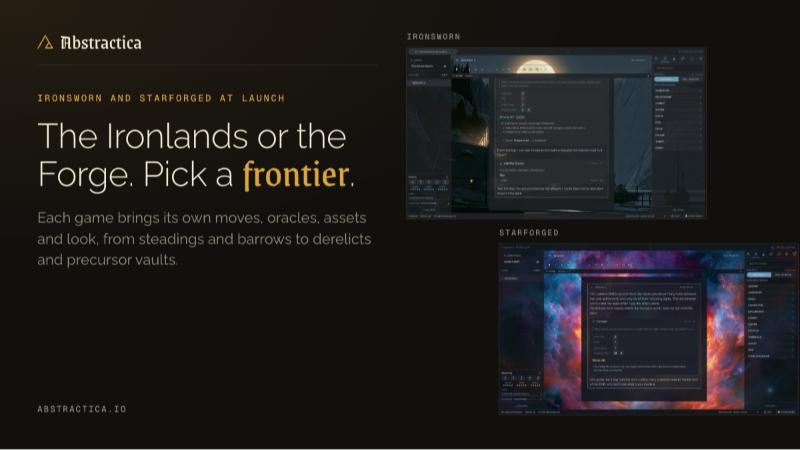
is a virtual tabletop for one. It's a desktop app (Windows, Mac and Linux) for solo play, with a journal, oracles, clocks and progress tracks, and
and
built in. It runs offline with no account. There's a free demo with one campaign, then a lifetime license.
Foundry can run solo games, but it was built for a group. This one wasn't.
So Which One?
Pick by the job that annoyed you. If hosting was the problem, try Fantasy Grounds or Roll20. If setup was the problem, try Owlbear Rodeo or ICVTT. If you liked owning your data and hated the module churn, try Cauldron VTT or FreeVTT.
And if your group is fine, keep Foundry. It's still the deepest tool on this list.
Whichever table you set up, it needs people around it. Sure, we're biased, but
Groupfinder  https://groupfinder.gg/players
is a good place to find them.